81,000 Voices Reveal AI's Human Heartbeat
The largest global conversation about artificial intelligence shows our hopes and fears aren't opposing camps—they're personal tensions living inside each of us.
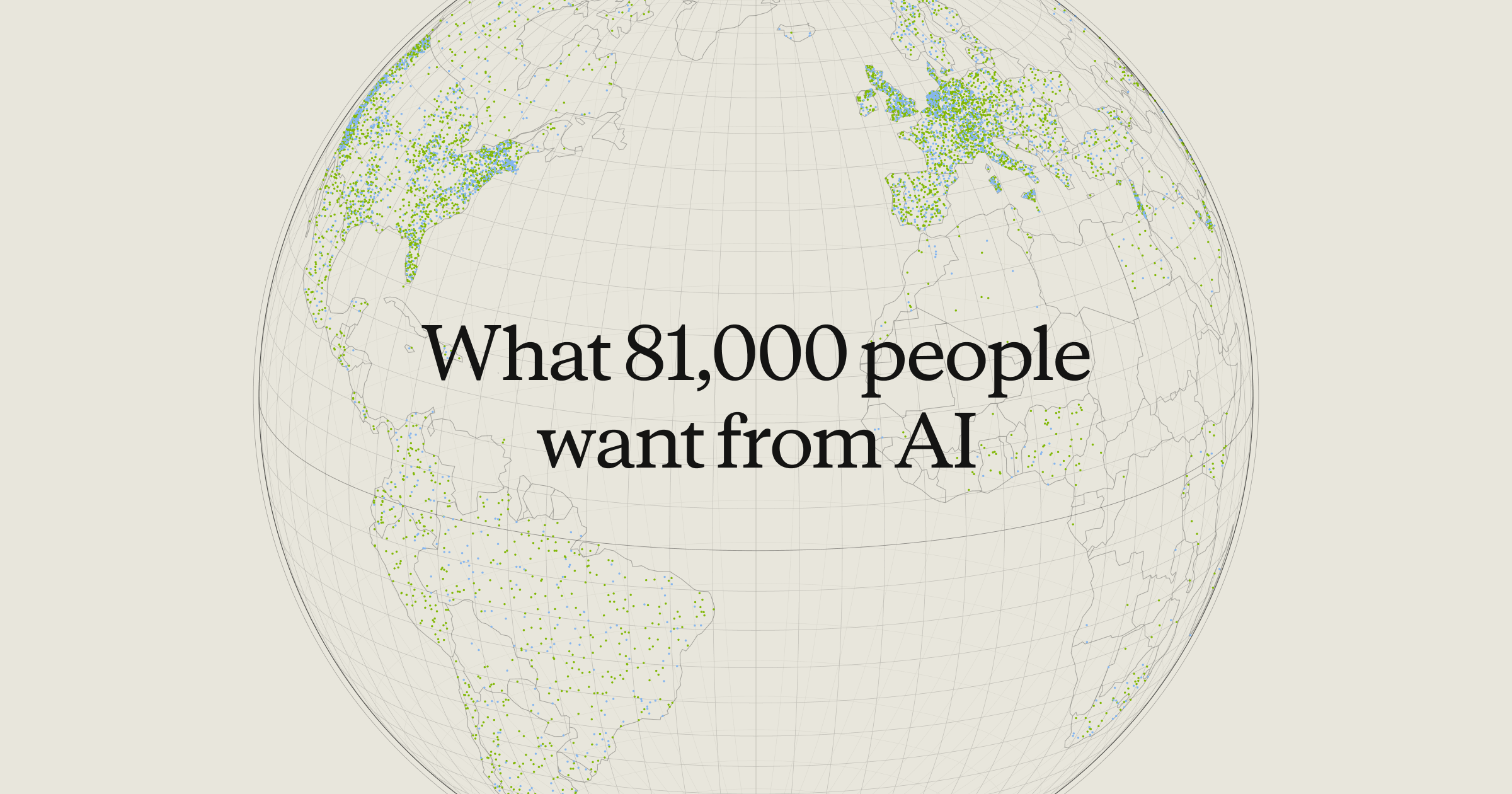
81,000 Voices Reveal AI's Human Heartbeat
Imagine asking everyone in a small city how they feel about the most transformative technology of our time. That's exactly what happened when 80,508 people across 159 countries sat down to talk about artificial intelligence. For the first time, we're hearing the global conversation we've been missing—not from experts or pundits, but from people already living with AI in their daily lives.
This isn't about abstract predictions or theoretical risks. It's about medical diagnoses finally made after nine years of confusion. It's about entrepreneurs in Nigeria hoping AI might help break cycles of poverty. It's about lawyers in Israel saving hours on contract review while wondering if they're losing their ability to think deeply. The story emerging isn't simple optimism versus fear—it's something far more human.
The Global Conversation About AI We've Been Missing
Until now, discussions about artificial intelligence have been dominated by Silicon Valley boardrooms, academic conferences, and regulatory debates. The voices of actual users—people integrating AI into their work, health, and creative lives—have been scattered whispers in the wind. This survey changed that by conducting interviews in 70 languages, creating what appears to be the largest multilingual qualitative study ever conducted on technology attitudes.
What emerges isn't a neat division between AI enthusiasts and skeptics. Instead, we find individuals holding complex, often contradictory feelings about the same technology. A software engineer in South Korea might marvel at AI's capabilities while worrying humanity has never dealt with something smarter than itself. A freelancer in the United States might credit AI with solving a medical mystery while fearing what comes next.
AI's Practical Help Already Changing Lives
Forget distant futures—AI is already solving real problems today. Users report the technology helping with medical diagnosis after years of misdiagnosis. Contract review that once took hours now happens in minutes. Entrepreneurs see potential pathways out of financial instability. These aren't hypothetical applications or corporate promises—they're lived experiences from people who've integrated AI into their problem-solving toolkit.
The technology isn't just saving time; it's creating possibilities that didn't exist before. Someone living hand-to-mouth can explore business ideas that might break the cycle. A patient can finally get answers after nearly a decade of uncertainty. These stories reveal AI's current impact extends far beyond chatbots and image generators—it's becoming a partner in navigating life's most challenging situations.
The Dual Nature of Our AI Relationship
Here's the surprising truth: hope and alarm about AI development don't divide people into opposing camps. They coexist as personal tensions within individuals. The same person who celebrates AI's help with contract review worries about losing their ability to read deeply. Someone grateful for medical insights fears what happens when technology surpasses human intelligence.
This internal conflict represents a more honest relationship with technology than the polarized debates we often see. It acknowledges both AI's incredible potential and its genuine risks. People aren't choosing sides—they're trying to navigate a complex new reality where the same tool that helps them might also threaten aspects of their identity, livelihood, or humanity.
What Keeps People Awake at Night About AI
Specific concerns emerge clearly from these conversations. Job displacement isn't theoretical—users report being laid off because companies wanted to replace them with AI systems. The loss of human cognitive abilities worries professionals who fear outsourcing their thinking to machines. There's anxiety about humanity facing something smarter than itself for the first time in history.
These aren't abstract philosophical concerns. They're immediate, practical worries affecting careers, mental capabilities, and societal stability. A technical support specialist loses their job. A lawyer wonders if they're becoming dependent. A software engineer questions how we prepare for an intelligence we can't fully understand. The fears are as concrete as the hopes.
What People Really Want From AI's Future
Users want visions of "AI going well" grounded in concrete human aspirations rather than abstract promises. They're tired of grand pronouncements about technological utopias or dystopias. Instead, they want AI development connected to real human needs: better healthcare, economic opportunity, creative expression, and meaningful work.
The message is clear: build AI that serves human flourishing, not just corporate profits or technological advancement. People want technology that enhances rather than replaces human capabilities. They want systems that help break cycles of poverty rather than creating new ones. They want tools that support diagnosis without eliminating the doctor-patient relationship.
Navigating Our Shared AI Journey
This global perspective offers crucial guidance for how we develop and integrate AI into our lives. First, recognize that people's relationships with AI are complex and personal—not easily categorized as pro or anti-technology. Second, ground development in concrete human needs rather than abstract technological possibilities. Third, address legitimate fears about job displacement and cognitive dependence with practical solutions, not dismissive optimism.
Most importantly, these 81,000 voices remind us that AI's future isn't predetermined by algorithms or corporate roadmaps. It's being shaped daily by how people choose to use—or resist—these tools in their lives. The tension between hope and fear isn't a problem to solve but a reality to navigate wisely. As we move forward, the question isn't whether AI will transform our world, but whether we can steer that transformation toward human flourishing.
The conversation has started. Now we need to keep listening—and ensure these voices shape what comes next.